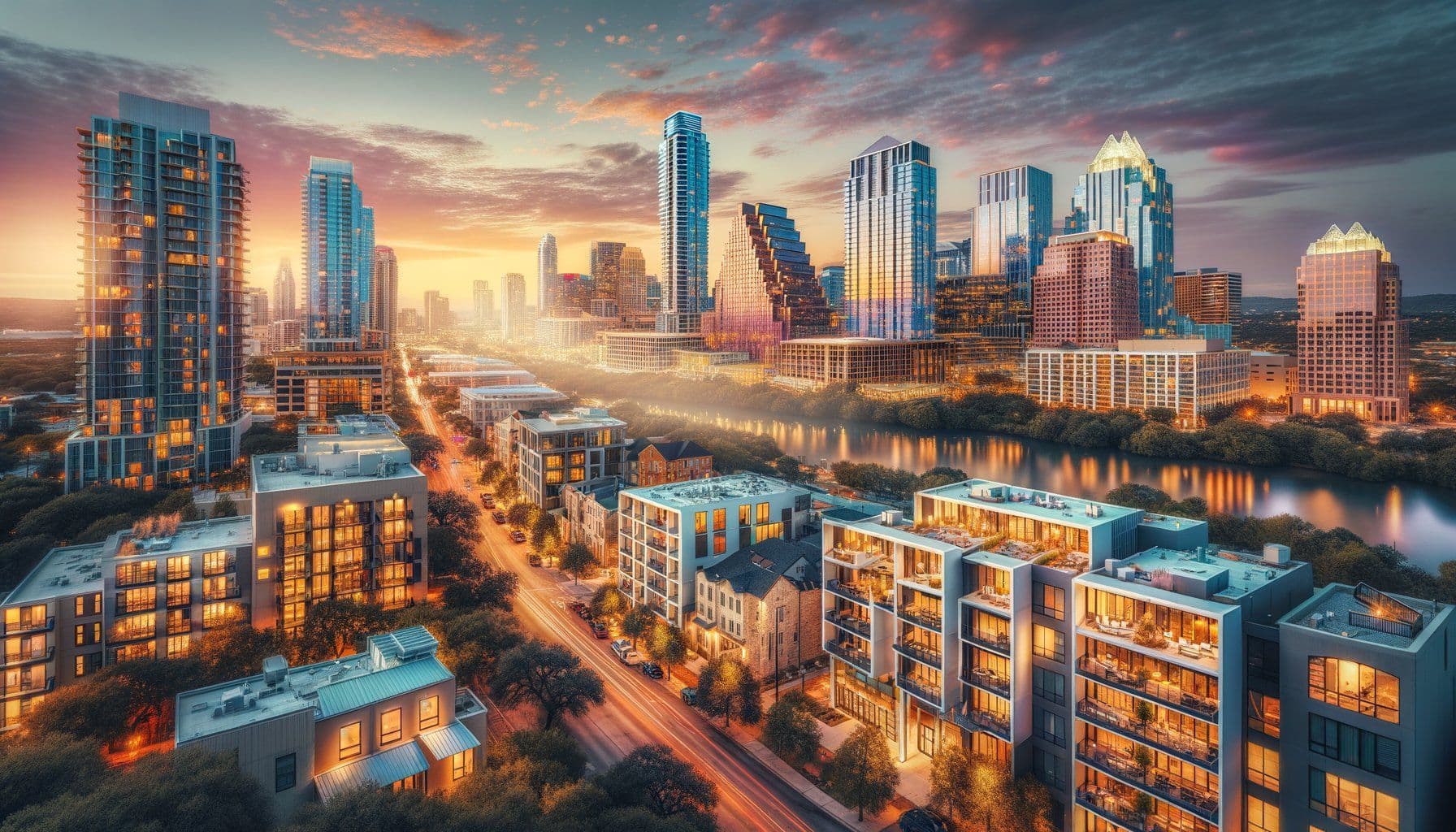
Explore how Austin's housing market remains strong despite rising mortgage rates. Learn about demand, supply trends, and investment opportunities today.
R
Real Estate Abroad Team
April 7, 2026
Updated Apr 7, 2:02 PM
# [Austin Real Estate: Demand Holds, Supply Tightens Amid Rate Pressure](/news/)
Austin's real estate market is showcasing remarkable resilience as buyer demand remains robust despite rising mortgage rates. In this dynamic environment, the new listing-to-pending ratio has consistently outperformed projections for 2025, indicating a strong appetite among buyers. However, supply constraints are becoming increasingly pronounced as builders pull back on new developments. Year-over-year sold prices have shown a lag; nevertheless, leading indicators suggest a potential recovery on the horizon. With inflation surging to a 14-year high and mortgage rates climbing to 6.500% for 30-year loans, the landscape is evolving rapidly for both buyers and sellers in Austin.
## Main Market Impact
The Austin real estate market remains an anomaly in the face of broader economic pressures. According to the latest data from Team Price Real Estate, buyer demand has not only held steady but has also demonstrated resilience, outperforming the expectations set for 2025. This persistence is particularly noteworthy as the market contends with rising mortgage rates, which have reached 6.500%, a significant increase compared to previous years. Despite this uptick, the strong demand indicates that many buyers are still keen on securing properties in Austin, a city that has long been a magnet for tech professionals and remote workers.
The new listing-to-pending ratio has been a critical metric to watch. As of the last month, this ratio has consistently exceeded forecasts, signaling that more listings are converting to pending sales than previously anticipated. This shift suggests that while the market is under pressure from rising costs, buyers are actively engaging and making offers. Furthermore, the ongoing demand has implications for future market stability, as it indicates that buyers may be willing to absorb higher financing costs in exchange for desirable properties in the Austin area.
> **""Despite rising mortgage rates, buyer demand in Austin remains strong, with new listing"**
>
> *— to*
## Supply Constraints in the Market
While demand remains robust, the supply side of the equation is tightening, primarily due to a pullback from builders. Economic conditions and rising inflation have led many builders to reconsider their project pipelines, contributing to a decrease in new housing starts. This contraction is evident in the year-over-year comparisons, where new listings have not kept pace with pending sales, thus exacerbating supply shortages.
The implications of this tightening supply are significant. With fewer homes available on the market, competition among buyers is likely to intensify, which could lead to upward pressure on property prices. Additionally, the lack of new construction could hinder the market's ability to meet the ongoing demand, potentially creating a more pronounced imbalance in the coming months. The National Association of Home Builders (NAHB) has noted that the decrease in builder confidence is a concerning trend, as it may lead to long-term repercussions for home availability in the Austin area.
### Current Market Conditions
| Metric | Value |
|--------|-------|
| Mortgage Rate | **6.500%** |
| New Listings Lagging | **-15% Year-over-Year** |
| Pending Sales | **+10% from Last Month** |
## Year-Over-Year Price Dynamics
Despite the strong buyer demand, year-over-year sold prices in Austin have shown signs of lagging, presenting a complex picture of the market. As of now, the average sold price has decreased by approximately 5% compared to the previous year, a reflection of the higher mortgage rates affecting buyer purchasing power. However, analysts believe that this trend may not last long. Leading indicators, such as increased pending sales and a tightening supply, suggest a potential floor on prices, hinting at a possible recovery in the near future.
This price lag can be attributed to the immediate effects of rising interest rates, which have made financing more expensive for many potential buyers. On the flip side, the resilience of demand indicates that many buyers are still willing to enter the market, albeit with a more cautious approach. Factors such as job growth in the Austin area and the city's continued appeal as a tech hub could further bolster demand, helping to stabilize prices as the market adjusts to the current economic climate.
## Broader Economic Context
The broader economic context significantly influences the Austin real estate market. Inflation has surged to a 14-year high, which has resulted in heightened costs for both consumers and businesses. This inflationary pressure has directly impacted mortgage rates, leading to the current 6.500% for 30-year loans. High inflation, coupled with rising interest rates, can dampen buyer sentiment, but the strong demand in Austin suggests that many individuals view real estate as a hedge against inflation.
Moreover, the tech sector continues to flourish in Austin, attracting a steady influx of new residents. As companies expand their operations and remote work becomes more normalized, the city's appeal as a residential destination remains strong. This influx is likely to sustain demand for housing, even amid economic uncertainties. Real estate experts emphasize the importance of monitoring these trends as they could dictate the pace of recovery for Austin's market in the coming months.
> **""Austin's economy continues to attract new residents, which underpins the demand for housing despite economic pressures""**
>
> *— Local Economic Analyst*
## Conclusion: Looking Ahead
In conclusion, the Austin real estate market is navigating a complex landscape characterized by strong buyer demand amidst rising mortgage rates and tightening supply. While year-over-year sold prices have experienced a decline, the resilience of the market, as indicated by the new listing-to-pending ratio, suggests that a recovery may be on the horizon. As builders reassess their strategies and buyers adapt to the new financial realities, the future of the Austin real estate market will depend on how these dynamics evolve.
Real estate experts will be closely watching the interplay between inflation, interest rates, and housing supply as they provide insights into potential market shifts. For buyers and investors, understanding these trends will be crucial in making informed decisions in this ever-changing environment. The market may face challenges, but the foundation of demand remains strong, indicating a potential for growth in the future.
{{INLINEIMAGE:Modern home in Austin showcasing sustainable architecture and energy efficiency}}
{{INLINEIMAGE:Construction site in Austin highlighting the current state of new developments}}
{{INLINEIMAGE:Real estate market trends graph illustrating changes in price and demand over time}}
Never Miss a Market Update
Get the latest real estate news, market insights, and investment opportunities delivered straight to your inbox. Join 50,000+ investors staying ahead of the curve.
We respect your privacy. Unsubscribe at any time.
Financial Journalism
Real Estate Markets
Economic Analysis
Content reviewed for Experience, Expertise, Authoritativeness & Trust
Share this article
About the Author
R
Real Estate Abroad Team
Financial Journalist
Real Estate Market Analyst
Economic Reporter
8+ years experience
Global News Desk
150 articles published
Dedicated team of financial journalists and real estate analysts providing timely, accurate news coverage on international property markets.